Blog

  • MapleStory

    MapleStory is a free to play Massively Multiplayer Online Role Playing Game (MMORPG for short) made by Nexon, the brains behind Counter Strike Online. They have just bought out their first expansion to the original game, entitled Knights of Cygnus. With an estimated 3.5 million subscribers from the US alone, I wanted to see what all the fuss was about and if it would be good enough to drag me away from another MMORPG that I play.
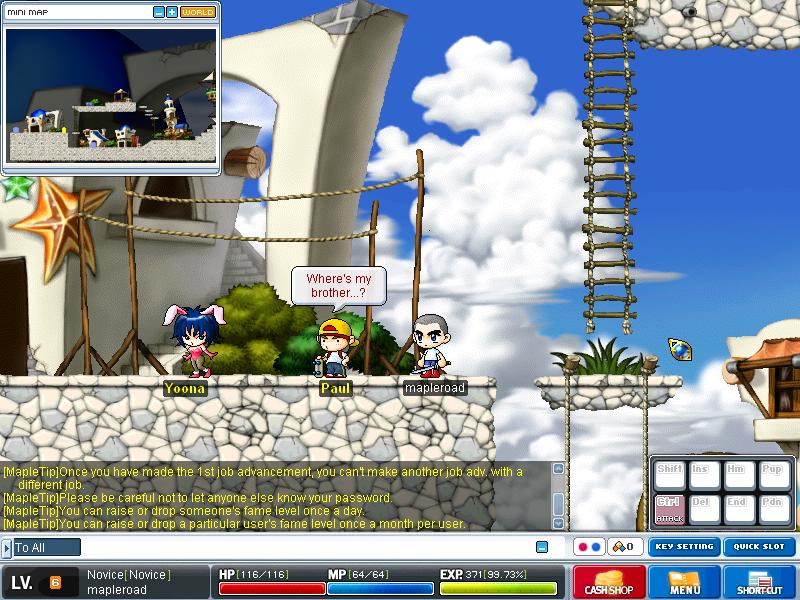
    For this review I was given the use of a pre-established character called tst21 – imaginative name, I know! He is level 50, with the job class Wind Breaker, but I will explain the job classes a bit later on. Because of this I missed the beginning of the game i.e. the story and don’t exactly know what this game is all about, so I will make no references to the story in this review.  Maple Story is a huge game and to make this review easier to read, I have split it into sub sections.

    Graphics/Environment:

    The first thing I notice about the game is how pretty it all is, the developers have spared no detail in the gorgeous 2D vibrant world MapleStory is set in. Everything is well detailed, yet looks very simple, bright and shiny. The different areas of the world have a very authentic feel, for example the Japanese level feels authentic with beautiful cherry blossom trees and NPCs in well detailed Kimonos. This has obviously been a labour of love for the Dev team.

    Character sprites are also nicely done with a kind of cutesy anime look to them. Big eyes and spiky hair are all here, and they all have nicely detailed facial expressions. In fact, the word cutesy could be used to describe the entire games image which is in no way a bad thing – but it probably won’t be every ones cup of tea. I personally like my games to look a little more realistic, but that doesn’t mean that I don’t appreciate how well this look has been done.

    The game itself plays like a 2D side-scroller-come-platformer, you are only able to move your character backwards, forwards and jump up to the next level of the town/map you are on. Towns and other maps are all multi-levelled so it’s important to explore it all so you don’t miss anything important. It all feels very reminiscent of Mario type games.

    Enemies are also portrayed in a similar way to Mario and other such games, there’s no random battles in Maple Story as you can see all of the enemies on the screen with you, you simply walk over to them, press Ctrl to attack and pick up any dropped goodies and money that come tumbling away from your defeated foe, which range from pointless goodies to stat boosting weapons and armour that you can’t buy in shops.

    This makes battling incredibly easy, it can get trickier at times though when you have huge amounts of enemies on screen all vying for your blood. One downside to the battling is that the level of enemies isn’t too consistent when you move from area to area. One example of this is, I moved from one screen with level 8 enemies to the next screen with level 40 enemies which wiped me out in a shot.
    Exploring the world is relatively easy, (besides the random enemy levels as mentioned above) you walk to the end of the screen you are in and there is a teleport type device which moves you to the next area. As long as you keep an eye on the map you should be able to get to wherever you want to go pretty trouble free. Your basic goal is to run around the towns and get quests from NPC’s dotted around the place, complete those quests and then talk to the end NPC to finish it. Most quests involve fetching items or delivering items for NPC’s to gain rewards. This is okay for a bit but it does get exceptionally tedious after a while and I unfortunately felt a little bored of running back and forth collecting items. There just wasn’t enough variety in quests that I had encountered so far.
  • Ben 10’ #1 Is A New Take On The Cartoon Classic

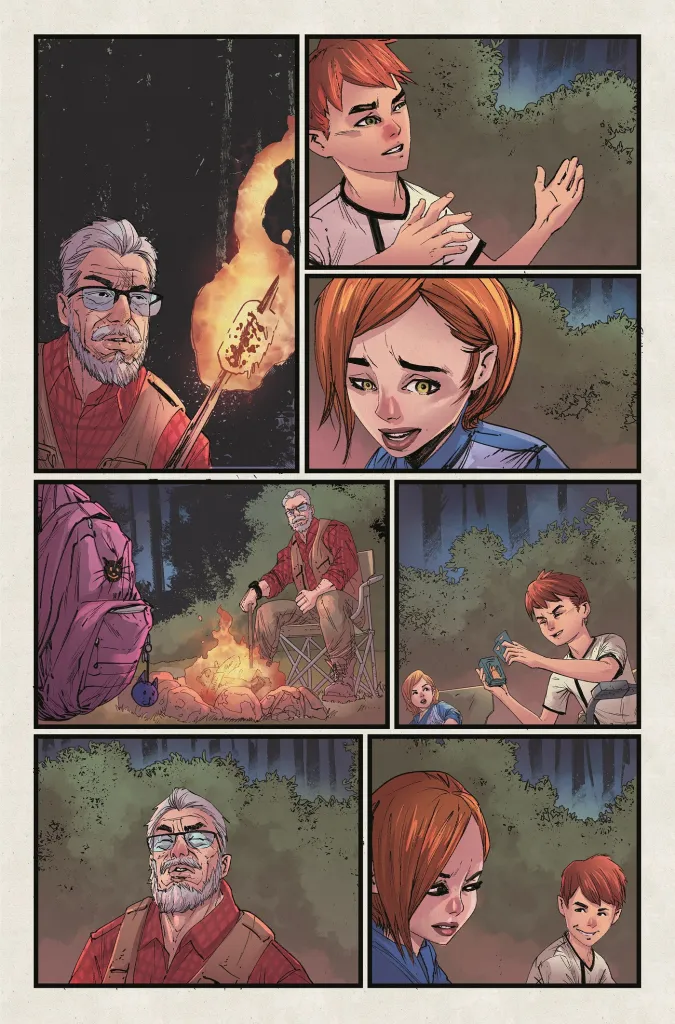
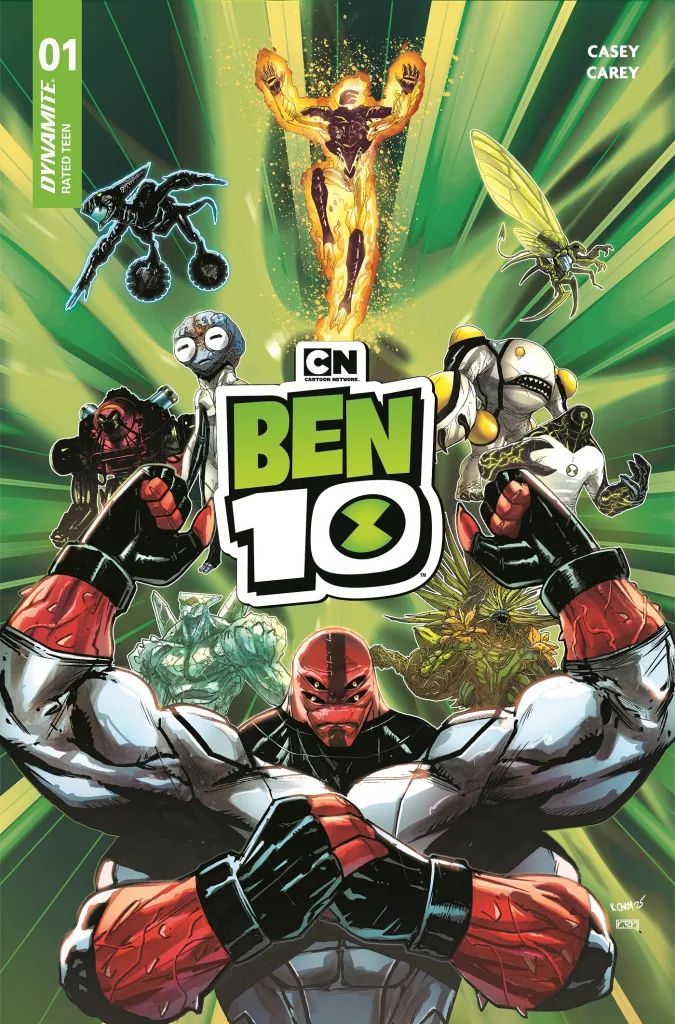
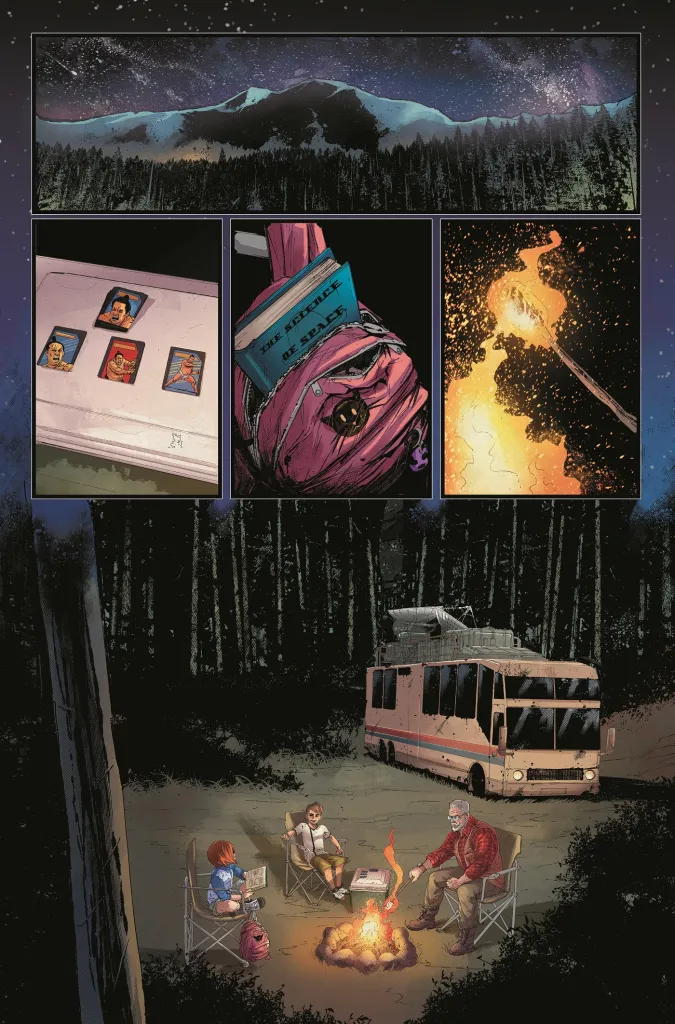
    Now, the classic cartoon is getting a comic book reboot, and it’s a completely unique one. For once, the original creators are at the helm, as the series is plotted by Man of Action, with a script by Joe Casey, art by Robert Carey, colors by Ren Spiller and letters by Taylor Esposito.

    Ben Tennyson is just an average kid, spending his summer vacation with his Grandpa Max and cousin Gwen. Yet, when a strange device crash lands near their campsite, Ben’s life is about to change. The Tennysons are about to be hunted for the strange watch on Ben’s wrist…

    Now, this story might seem familiar. Yes, this is a reboot of the classic cartoon, and that does mean this issue follows the plot of the pilot episode pretty closely. But having Man of Action (consisting of Casey, Joe Kelly, Steven T. Seagle and Duncan Rouleau) involved makes it clear this isn’t just a rehash. This is a story honoring what made Ben 10 great.

    And here’s the thing about that — this issue does echo a lot of Ben’s first adventure. It might even seem like a straight adaptation of it. But there’s small changes throughout that makes it clear it’s more than that.

    What Casey seems to be doing here is taking the foundation of Ben 10, and transforming it into a mature serial. It’s not overly serious, and definitely not adult though. I definitely felt like I could hand it to my kiddo (which I will once our physical copy arrives). But this is Ben 10 as a comic — a little deeper, serialized, and using the medium to its full advantage.

    Carey is a great companion to Casey in that mission. While everything is on-model (the biggest difference is Max Tennyson’s skinnier and slightly more aged appearance) he has a strong depth in his pencils, and uses more angular, sketchy lines to make it clear this isn’t exactly the world we know.

  • Resident Evil 4 (PS5)

    A Triumphant Tribute

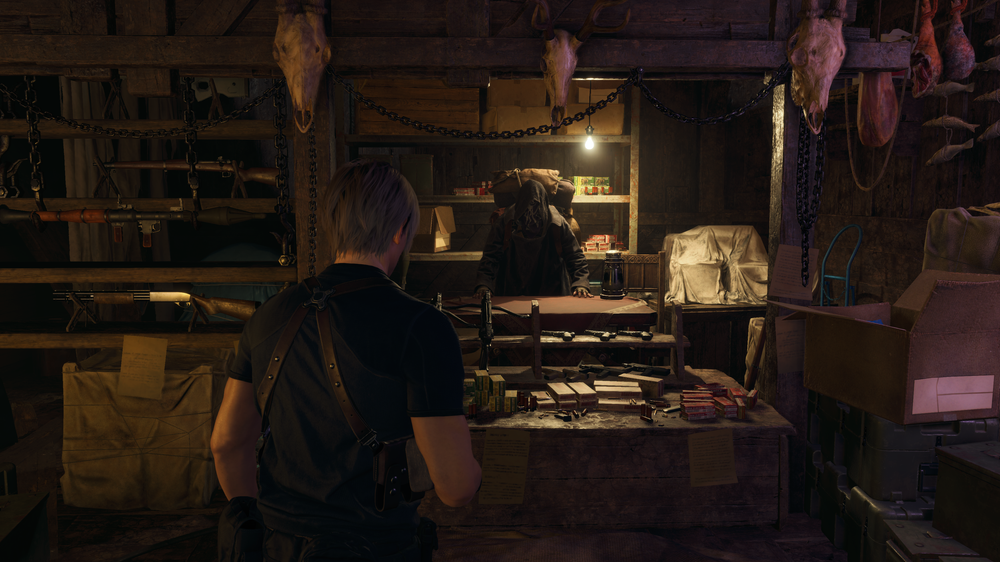
    Resident Evil 4 is a particularly important game to me, as I’m sure it is to many people, so when it was announced that it would be reimagined in a similar style to Capcom’s recently successful remakes I was still hesitant about whether or not the RE4 remake could possibly be as good as the original. Having now played the remake all the way through, this might be one of the best Resident Evil games of this era, especially from a pure gameplay perspective. While it doesn’t have the same tone as the original, this remake serves as a uniquely original approach to the source material that is perfect for new players and veterans of the initial game. 

    For those unaware, Resident Evil 4 is a remake of an iconic action horror game of the same name where the seasoned soldier Leon Scott Kennedy is tasked with a mission to save Ashley Graham from the clutches of a parasite-worshipping cult in the Spanish countryside that’s mutated the people and animals there into terrifying monsters that are controlled by a wicked leader named Osmund Saddler. Leon is thrust into a desperate survival situation where he faces everything from giant salamanders to savage chainsaw-wielding sisters to spider-like insects and more nightmarish beings twisted into unnatural shapes by a wicked creature known as the Las Plagas parasite. All the while, agents of the evil Umbrella Corporation move to learn more about the parasite for their own nefarious purposes. What results is an explosive tour-de-force where players take on the role of an action hero and use whatever they can get a hold of to survive, including a spread of impressive military-grade weaponry. 

    For me, Resident Evil 4 was a gateway into the world of horror and horror-themed games and media. A friend loaned me a copy of the PS2 release in 2005 and said, “Trust me. You’re going to love this.” From there I spent weeks chipping away at it, taking breaks when I was just too scared to keep playing. Around this time I was afraid of most violent imagery which was a dominant force in the 90s and 2000s. Even daytime television wasn’t safe as ads and trailers constantly showed a little too much of the latest horror films. Yet, the methodical approach to survival, the interesting monsters, and the campy nature of Leon’s mission to save the president’s daughter were so immersive to me as a teen allowing me to power through my fears and discover a game that would go on to be a favorite. I would put in a CD of System of a Down’s Toxicity album to drown out the ambient growls while darting around the sewers and fighting the Verdugo. I still think of Resident Evil anytime I hear a SOAD song from that album. To this day, I prefer my horror games to have enough action for me to fight back from the dangers in the shadows but because of RE4, I was able to play so many games that provided a ton of memorable moments. 

    Since falling in love with RE4 on PS2, I have played the game in pretty much every form available including PC, Wii, Switch, and more recently the vastly different approach to the action on Meta Quest 2. Despite the game having a touch of stiffness compared to most games after its release, RE4 is still enjoyable in any form and it’s interesting to see how the game has evolved through different ports and versions. This is why the RE4 remake is such a fascinating release because it does change a lot but manages to create a balance of gameplay improvements and storytelling to make a more cohesive, more scary adventure. 

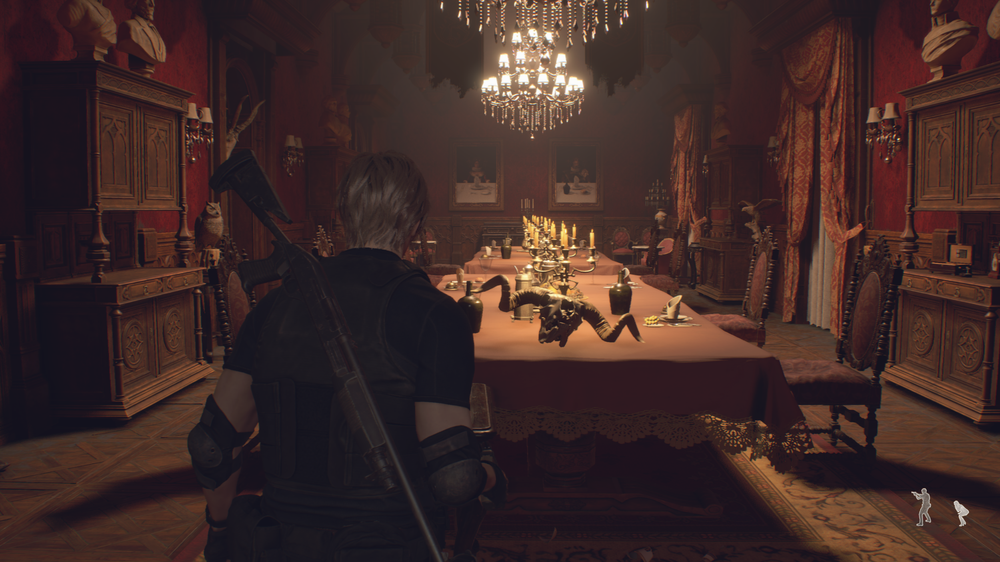
    Taking on a darker, more grounded version of this game’s world, Resident Evil 4 is in that familiar art style we’ve seen since the release of Resident Evil 7 in 2017, utilizing the impressive RE Engine. Monsters are horribly gruesome, full of writhing tentacles, dripping with blood, and twisted in ways that are just unsettling. The game’s environments have been streamlined, including new areas and paths that keep veteran players on their toes and I believe that the adventure flows much better now. A few areas are revisited with the ability to open locks for treasures, rewarding those who take the time to comb over the game and through new set pieces. 

  • Sonic 4 – is this the best game franchise reboot in years?

    Adam explains why the first ‘classic series’ Sonic release in sixteen years may have just reawakened his gaming identity. (PS3 version tested)

    Sonic the Hedgehog 4: Episode I review 

    Last night I was hanging around in Soho with a friend, enjoying a sneaky Sunday pint outside one of our favourite pubs. Randomly, one of the UK games industry’s better known PR people strolled past; he was in town for a preview event taking place just this morning. In our catch-up banter, we discovered that despite being mercilessly immersed in gaming, we both have a huge pile of games to get through but just haven’t got around to playing them. 

    For him, the issue is a lack of time to actually play though any games (which makes sense, as I know he works really hard to keep us games media types happy). But for me these days, it seems to be more a question of apathy towards actually playing through lengthy video games in general. I’ve felt this way for about the last year; I just haven’t fancied devoting the time required to play through any of the last year’s major releases. Not even the furore of Modern Warfare 2 or the charm of Mario Galaxy 2 tempted me; I’ve just felt like I’d rather spend my leisure time doing other stuff. I had quietly, almost guiltily been wondering: do I no longer care about my most important pastime? 

    The reason I’m mentioning all this here is because I had a sneaky feeling that Sonic 4 might change this current ‘lull’ in my attitude towards spending time playing games.

    I knew that Sonic 4 would be one of probably two games released this year which I would medically need to play (the other being Portal 2), mainly because of how emotionally invested in each series I have been in the past. (Particularly Sonic, without which I would probably never have ended up becoming involved in games in the first place). I also knew that since Sonic 4 was being released episodically, it probably wouldn’t be too large a time investment. 

    So when Sega’s friendly PR man gave me a PSN code to download the game last week, I switched on a console with an itch to play a game (rather than watch a Blu-ray or DVD) for the first time in literally months – since Super Street Fighter IV, I think. (Actually I had already been playing Sonic 4 on iPhone, released on App Store last Thursday, but the console version – released later this week – is a whole lot more impressive).

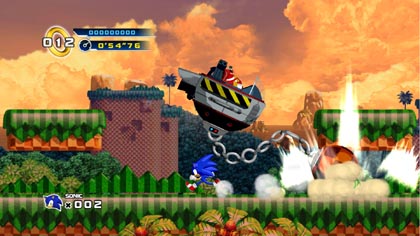
    Screaming ‘Classic Sega’, Sonic 4 is simple, beautiful, slick, and for me, one of those rare titles that reminds me why I liked playing games in the first place. It’s a nice blend of classic 2D Sonic gameplay with modern, impressive HD graphics. By the time I finished playing through, I realised my assumptions were right: I feel like I suddenly care about games again! And I felt excited enough to steal the review opportunity from our regular editors. 

  • Kamen Rider: Memory of Heroez Review – A Love Letter Trapped in a Bygone Era

    Long gone are the days where a popular show or  movie property would get an obligatory shovelware  video game tie-in. Quality was often less a priority, as said  games would need to sell just enough to justify development costs. While this trend isn’t as widespread, it’s not uncommon for publishers to cash in on subpar product by riding the coattails of a popular brand.

    Preorder Games

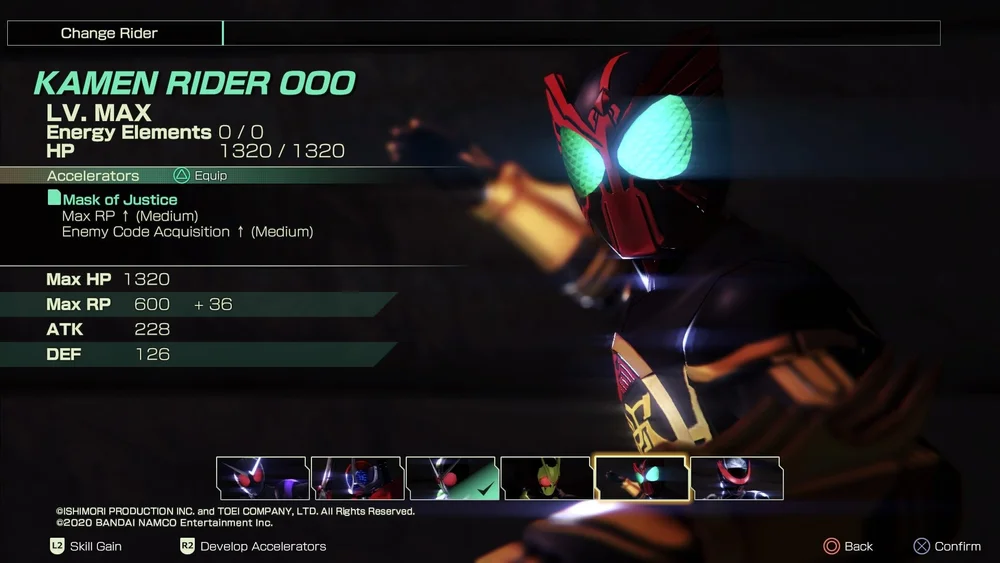
    I’m going to be blunt about this. What makes Heroez’s gameplay different from other Rider games is that it ostensibly mimics the Souls series with its own version of a stamina gauge. While I make this comparison in jest, it’s hard to avoid the elephant in the room.

    To its credit, what the game dubs as “Rider Power” only depletes when performing certain actions, such as heavy attacks, unique attacks, dodging, and changing forms. Combat isn’t as tight as in Soulsborne titles, but isn’t as loose as a musou game, so the inclusion of a stamina resource for a lot of your heavy-hitting moves forces the player to take more deliberate and varied actions instead of simply mashing out the same attack combo over and over again.

    Preorder Games

    This game doesn’t have the deepest combat mechanics, but I do appreciate how you can add your own level of style by performing air juggles and mixing in various attacks by incorporating form changes mid-combo. The fights themselves aren’t completely devoid of complexity, either. There’s a balance between crowd control and maintaining your combo count, as the game will throw multiple baddies your way at any given moment. Most goons will get rocked even by light attacks, but will occasionally armor through weaker hits while winding up for a punch that will either jostle you out of your current action or straight-up knock you down. Other enemy types sport an armor gauge that you’ll need to break in order to stagger them and deal proper damage. Certain forms and attacks will have greater effects on enemies’ armor, incentivizing more careful Rider Power management.

    One other factor that comes into play when managing Rider Power is the fact that you can’t really heal during most of your runs through stages. Damage does not heal over time and there are no consumable items to speak of, so you’ll want to dish out those explosive jump kicks judiciously. You’ll primarily heal via computer terminals that act as checkpoints throughout the game. More often than not, these appear at a reasonable rate, but there are a few stretches where you won’t run into them for a while. You can heal via a few breakable boxes that offer 50% life regeneration, but these are found at fixed points. There is also a healing effect if you perform a successful dodge and counter-attack against specific attacks, but as each successful instance only regenerates 10% of your HP, the extra damage VS your opponent is the real payoff there. If you do fall in battle, the game is considerate enough to let you choose to either redo the encounter or respawn to a point right before said combat encounter in order to either re-spec your Rider or swap characters.

    Preorder Games

  • Minecraft

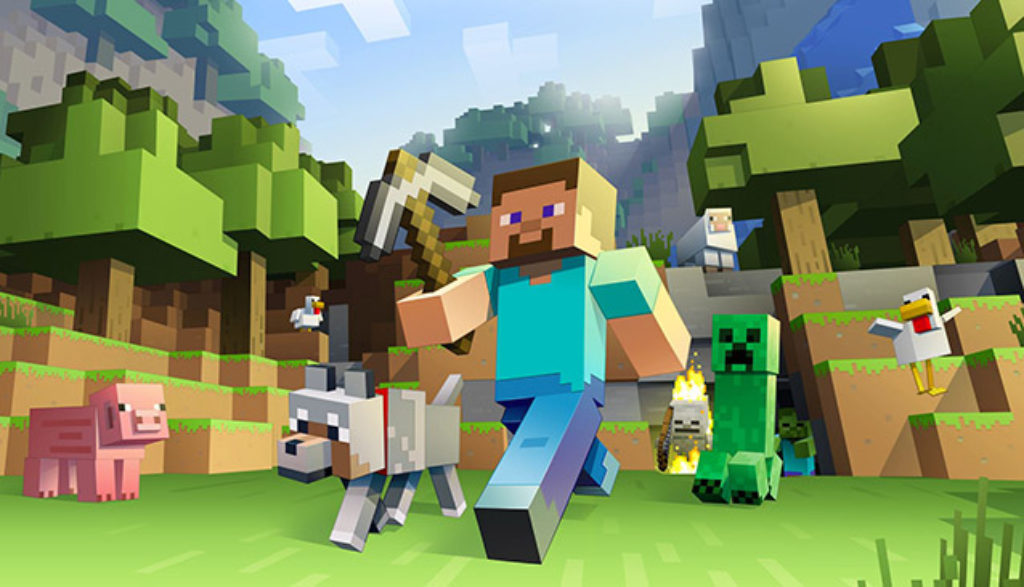
    More than 10 years ago when I first reviewed Minecraft for Plugged In, it felt like a curious little building game with blocky, pixelated characters and creatures set in an easy-to-break-down-and-build-up world. There were no instructions. You had to find your way through its building processes, item recipes and nightly creeper battles all on your own.

    In the years since, this quirky and creative little game has become a global phenomenon, with somewhere in the neighborhood of 200 million active users as of 2025. And some of those players likely weren’t even born when it first hit the scene!

    So, what is Minecraft today? Well, the game has evolved considerably over the last decade. Updates have added new features, content and mechanics. But in a real sense, it’s the same digital sandbox of open creativity that it always was.Getting started in the Minecraft world is easy. Gamers choose between Survival or Creative modes right out of the gate. If you just want to roam (or fly) through this vast world, exploring, building and crafting without threats from a scary nightfall, Creative mode is the way to go. Players in that mode don’t have to worry about hunger, health, or being attacked by enemies.

    If, however, you want more of an adventure, you’ll choose Survival mode. (More on that in a moment.)

    Whatever your initial choice, single players and co-op pals are plopped down in a randomly generated 3D panorama of forests, mountain ranges and deserts, or perhaps golden plains or frigid ice fields. It’s a different-every-time biome that’s vast and pretty … and still purposely pretty primitive looking, since it’s all constructed of virtual blocks. Even your own little avatar looks like he or she stepped out of an 8-bit game from oh so long ago.

    However, in 2025 the biomes around you are far more varied and distinctive. There are vast mountain ranges now; ancient underground cities; new unique villages, ruins, dungeons and monuments; and seven discernably different oceans to explore. There are even new biomes in a dark dimension called the Nether that you can discover, investigate and battle through.

    For those who have never dipped their toe into the Minecraft waters, the basics of gameplay remain very much the same. When you first arrive, you quickly realize that the undisturbed landscape around you is not meant to be left undisturbed. With a bit of experimentation, you discover that the blocky bits of the world can be broken down and turned into raw materials. And those raw materials can be used to build things.

    You might start by chopping down a tree or digging up a cube of ground, which will give you dirt, stone and wood that you can use to form rudimentary tools, which then help you more quickly break down and build things back up.

    As you identify new resources, you’ll also discover that the game’s crafting mechanic is a very complex system which incorporates hundreds of different “recipes.” The right combinations (which you find by trial and error), laid out in a crafting table menu, can allow you to concoct incredible structures and even energized machines—from magic armor to intricate puzzle mazes to enormous castles (complete with a moat and drawbridge).

    For those who want to take on the Minecraft world in Survival mode, they first get to choose from four different settings: Peaceful, Easy, Normal and Hard. Making the right choice is important, since it will determine how aggressive this world’s enemies will be.

    Along with new animal mobs, such as a goat that will butt you off a mountain top, there are a variety of new monsters that will attack you after the sun goes down. In this mode, then, the first order of business is building a shelter and weapons, as well as stocking up on some health-charging foods.

    Gamers can play on their own in single player, invite three other friends to join them on a local console (Xbox, PS and Switch), or team up in an online server “realm” with up to 10 friends.

    POSITIVE CONTENT

    I originally compared Minecraft to a digital version of LEGOs and Lincoln Logs. But over the years since then, this influential game has shown itself to be so much more than that. The game is simple yet expansive, throwing the door open for creativity. It has also helped to teach many kids about coding and been used in schools to teach logic and math.

    It’s an attractive game that can be played simply for its imaginative crafting aspects or as an explore-and-build adventure. And updates have offered new resources (new building materials and power supplies) that can be used in scores of new crafting recipes.

    I should also reiterate that in Creative mode, younger players have access to an unlimited number of in-game resources (along with the ability to fly anywhere) without the threat of attack. With a full coffer of materials to use, players create and explore to their hearts’ content.

    Minecraft also offers child accounts that help parents manage and monitor their kid’s gameplay and online chat access. This includes default features that limit the ability to interact with strangers or make in-game purchases.

    CONTENT CONCERNS

    In Survival mode, players encounter numerous enemies—especially because the in-game sun sets every 25 minutes or so. These adversaries include spiders; zombie-like creepers; skeletons with bows and arrows; villages of aggressive pillagers; Nether-dimension Piglins; an incredibly powerful Ender Dragon; and a new super baddie called the Warden. Indeed, the boss list in this game is long and growing.

    These baddies aren’t that scary, of course. They’re made of blocks, too, after all. But there is some bloodless battling if they catch you unawares in the dark. Smack them just the right way and they disappear in a blink of smoke.

    But if those foes land enough repeated blows, say, in the narrow confines of a darkened cave, the monsters can take players down to the point of death—where they lose all the crafting loot they may be carrying. Players then respawn somewhere else in the world.

    The violent content is not gory. Enemies and other creatures simply fall over and vanish after they’re defeated. (Animals can be attacked and they turn into pieces of raw meat that can be used for food.) Players can also craft swords and axes, bows and arrows to defeat those foes. Dynamite can even be crafted to blow up enemies and terrain. And players can expire after repeated attacks, and from falling, burning and drowning.

    Dimensional portals can be built and powered up to transport players to dark dimensions such as the Nether: a place filled with lava, corruption and evil mobs (non-player characters), such as Ghasts, Wither skeletons and Piglins. These creatures attack with swords and other weapons. Players use these domains to search out valuable resources, but they are decidedly dark and at times demonic-feeling.

    There is in-game merchandizing of DLC content, mini games, maps, player created content and textures that can be purchased with real-world cash.

    And, as alluded to above, players can interact with people they don’t know online if parental controls are not used to prohibit that kind of engagement with others.

    GAME SUMMARY

    As the years have passed, Minecraft has expanded. The creativity and simple play, though, has only gotten better. But parents of younger players should note that some areas and modes of play can feel a bit more dark and aggressive these days than they might have originally.

  • Hello world!

    Welcome to WordPress. This is your first post. Edit or delete it, then start writing!